TailorGAN
Generating Infinite-Length Images with a Relatively Small-sized Conditional Generative Adversarial Network Variant
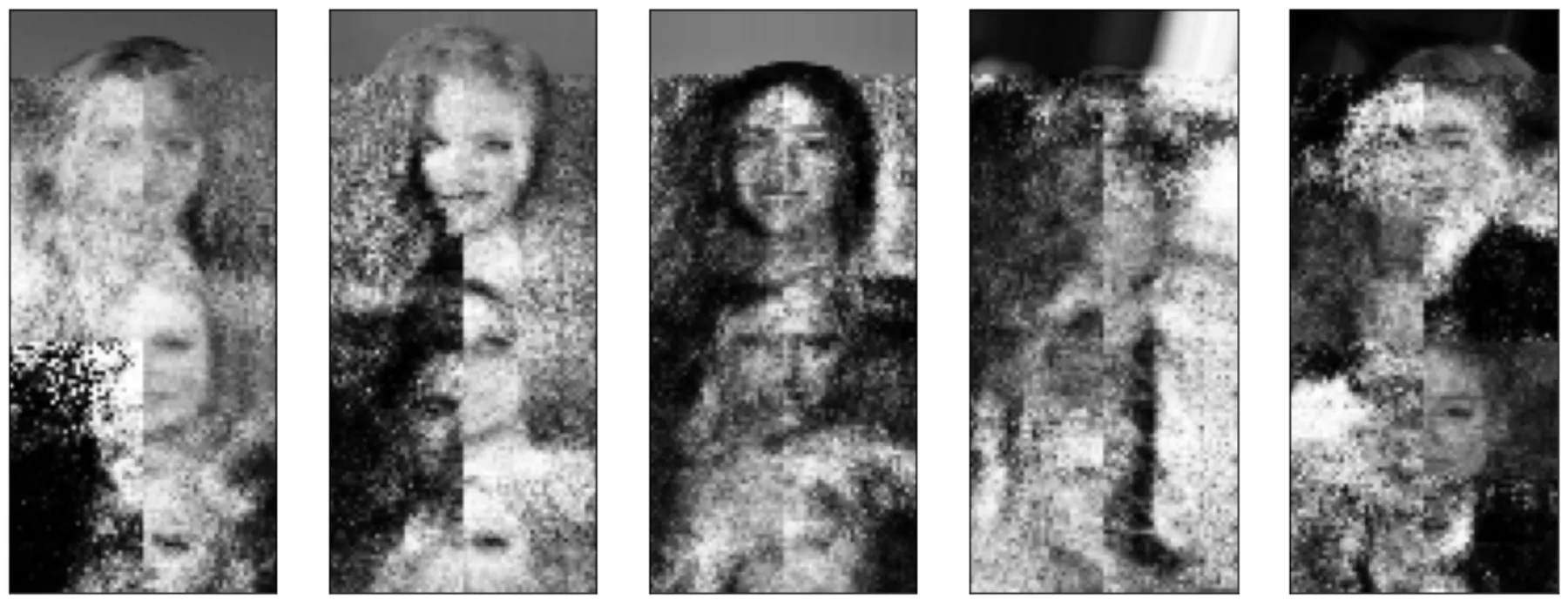
Initial results of TailorGAN
This was an early exploration: generating images of unlimited length with a small conditional GAN. I later took the same goal further with diffusion models in Trio Diffusion.
My primary goal is to create a GAN model with a simple and compact architecture capable of generating infinitely long images.
This page shows the initial results.
First, a series of tests were conducted on the MNIST dataset:
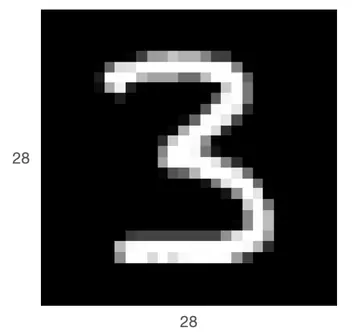
A sample of MNIST dataset (28x28 pixels)
Initially, I modified a simple fully connected conditional GAN based on my idea and explored various variations using the MNIST dataset.
Below, you will find a set of MNIST zeros, but some of the images are actually generated while the rest are from the MNIST dataset. So far, the results appear to be satisfactory:

In the image above, a portion of the zeros is generated while the remaining part is from the MNIST dataset.
As shown below, the initial attempts at generating infinitely long images did not yield satisfactory results:
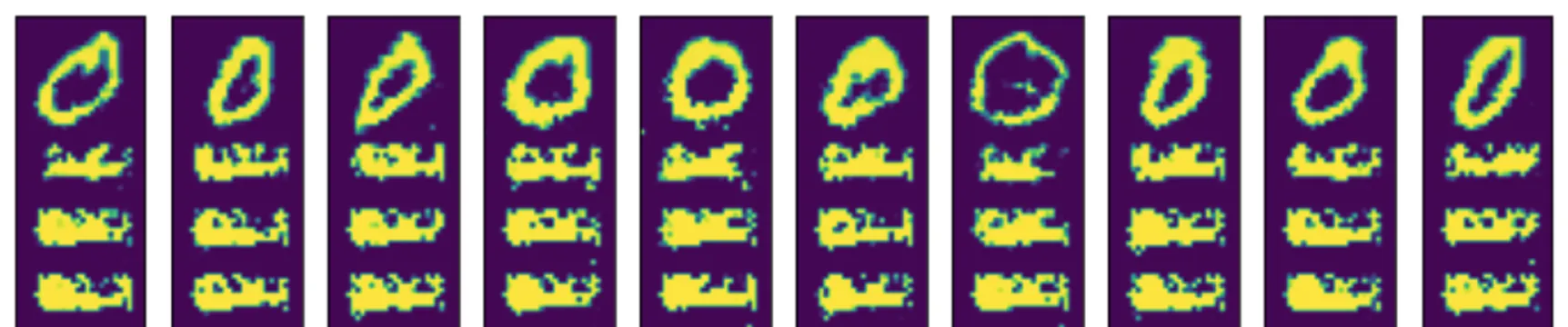
The system's ability to generalize beyond a certain threshold appears to be limited, resulting in the generation of nonsensical content.
In the subsequent trial with a new modification to the previous model, I obtained unusual yet improved results compared to the previous ones:
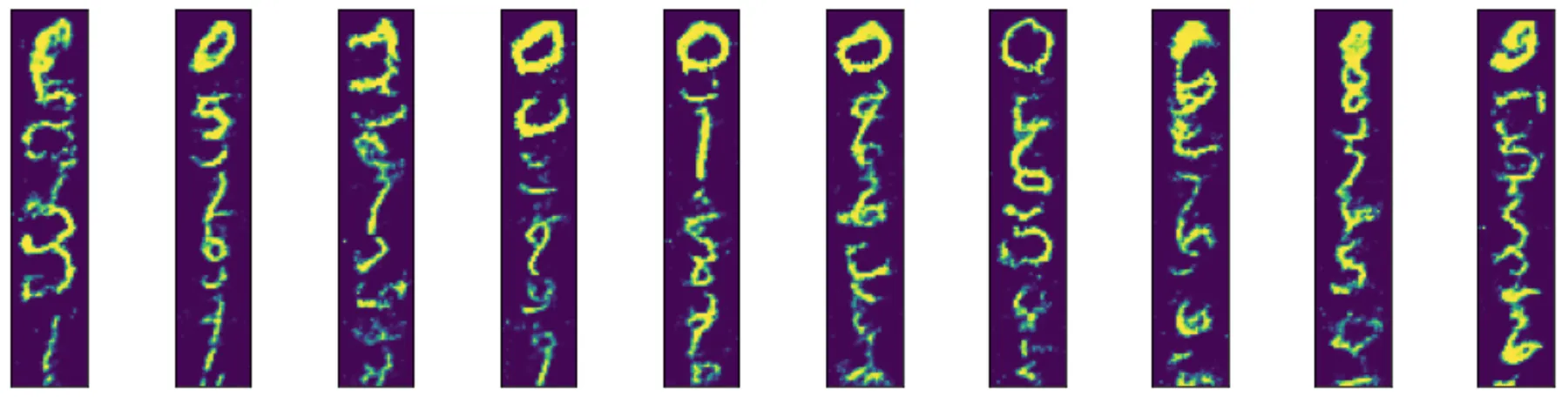
Despite the continued lack of coherence in the results, it is notable that they no longer exhibit a repetitive pattern as observed in the previous test.
Next, I applied another modification of the method to the CelebA dataset:
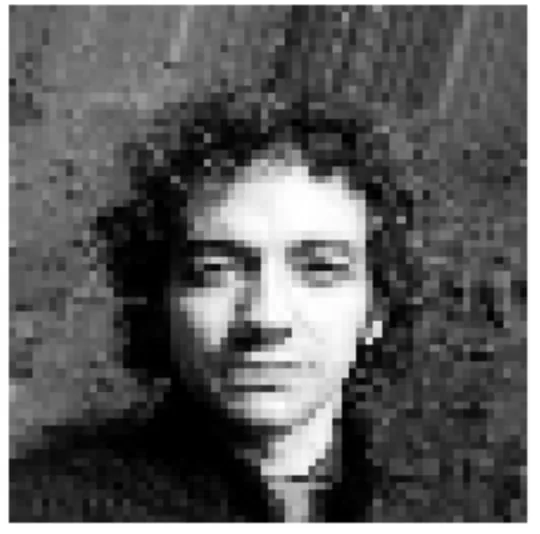
A sample of CelebA dataset (64x64 pixels)
Here are some initial results obtained:
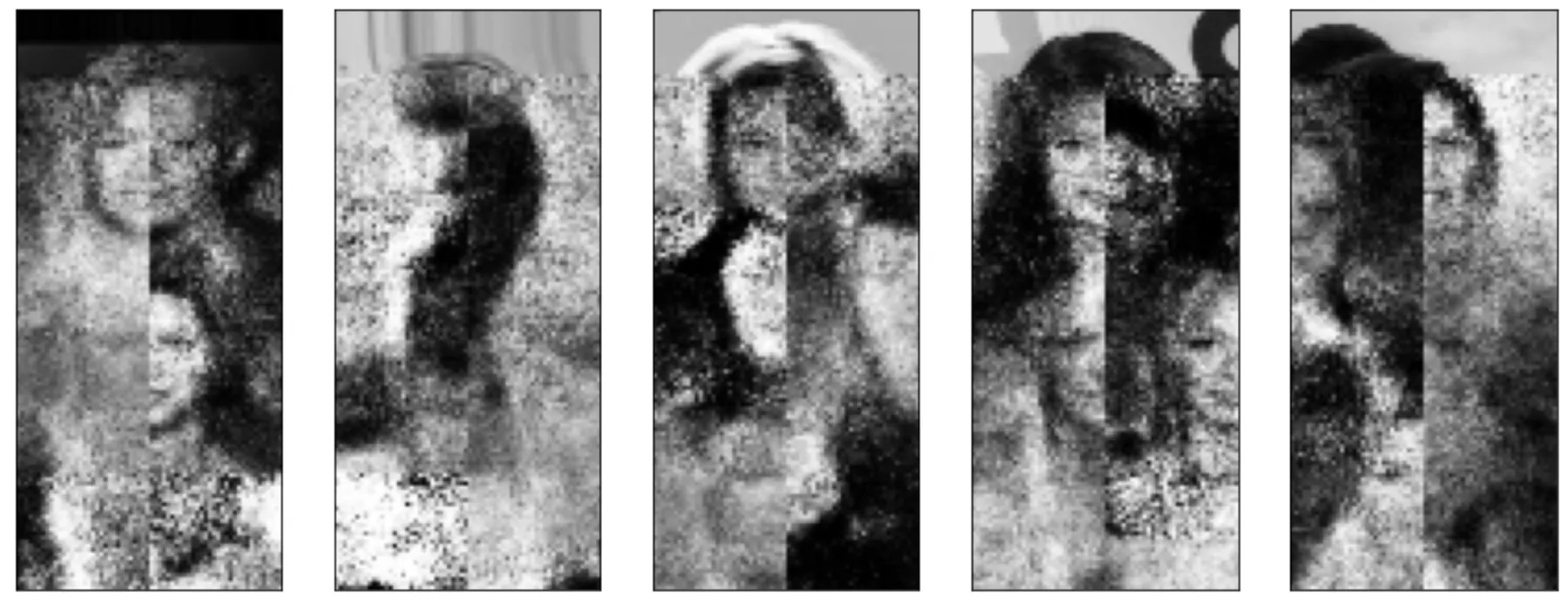
The initial results on CelebA dataset (Model A)
The initial results on CelebA dataset (Model B)